
The Model That Lied to You
Every Hudson County deal starts with a pro forma. Most developers update reactively. By then, it's already a problem.
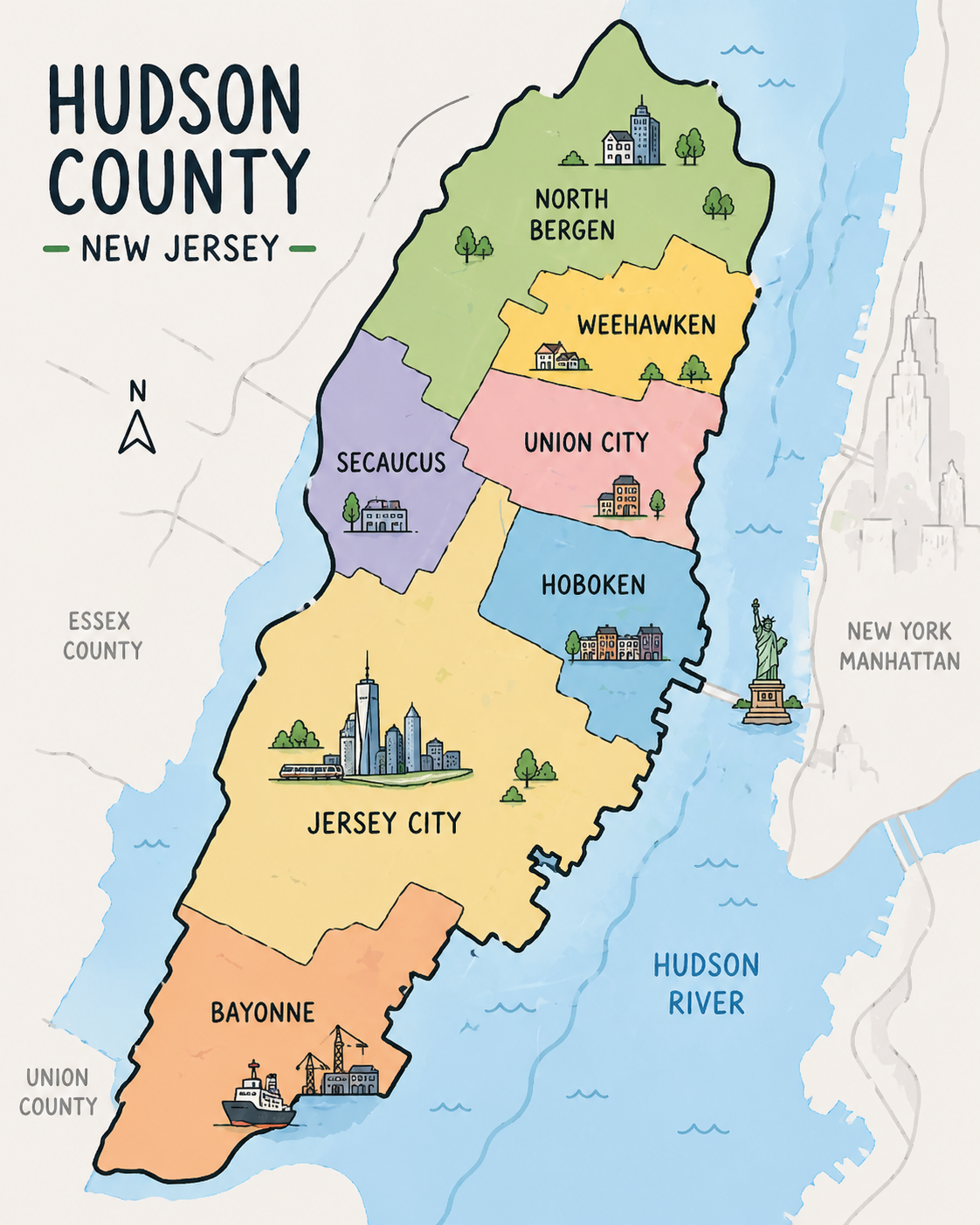
The financial model felt airtight. The numbers cleared. The deal moved forward. Then the approvals took longer than expected. The incentive structure shifted. The construction market changed. And somewhere between acquisition and groundbreaking, the model quietly stopped reflecting reality. This is not a rare failure. It is the default condition. The market is dense, transit-connected, and policy-driven in ways that make static underwriting dangerous. Deals don't just evolve — they transform.
"The biggest changes to a deal don't happen in the market. They happen between acquisition, approval, and execution."
Consider what just happened at 2859 Kennedy Boulevard in Journal Square. Jersey City's Planning Board approved a 55-story, 840-unit tower with a ground-floor Whole Foods — a deal that required nine variances, multiple redevelopment plan bonuses, and a separate approval from the Jersey City Redevelopment Agency.1 The project was first reported in October 2025. It was approved in April 2026. No groundbreaking date has been set.
At every one of those milestones — initial reporting, planning approval, JCRA approval — the financial assumptions underneath the deal shifted. Land carry costs extended. Construction pricing moved. The incentive structure that made the deal pencil was negotiated, not given. A developer running on their original acquisition model at any point in that sequence was flying blind.
· · ·
Hudson County has a pattern. Across the market, deals that begin as one thing reliably finish as something else. The former hospital complex at Bergen Hill — The Beacon — was repositioned from a single-use institutional property into a phased mixed-use residential community. The economics of that conversion bear almost no resemblance to a ground-up underwrite. Capex assumptions, lease-up timelines, and product type all changed midstream.2
At Canal Crossing, a 100-acre former industrial site on the Bergen-Lafayette edge, the planned 7,000-unit mixed-use community requires environmental remediation before a single vertical foot can be built.3 The acquisition model and the development model are separated by years of entitlement risk, cleanup cost uncertainty, and phased absorption. A static pro forma is not just unhelpful here — it's a liability.
Vista Pointe at Port Imperial — a luxury condominium from Toll Brothers and Daiwa House — represents the other end of the lifecycle problem.4 The deal looks clean from the outside. But waterfront condo absorption is deeply sensitive to capital markets, interest rate cycles, and buyer sentiment — all of which shift continuously between the time a project is conceived and the time units actually close. The model that justified the land price does not hold if rate assumptions move 200 basis points in either direction.
"If your model isn't changing, you're missing risk — or opportunity."
Bayonne makes the point from two directions at once. At South Cove, a hotel and two 300-foot residential towers were just approved by the Planning Board — a project nearly a decade in the making.5 The original underwrite from 2017 and the approved plan from 2026 are separated by a full construction market cycle, an interest rate environment that went from near-zero to generational highs, and multiple rounds of redesign. Whatever model justified the land acquisition does not reflect the deal being built today.
A mile away, the city broke ground on a new ferry terminal at the former Military Ocean Terminal — direct service to Manhattan, backed by the Port Authority and New York Waterway.6 That infrastructure changes the demand assumptions for every residential deal within proximity. Transit access reprices neighborhoods. A developer who underwrote a Bayonne site before that announcement and never updated their absorption assumptions is now sitting on upside they haven't captured — or pitching rents to lenders that no longer reflect the market.
What these projects share is not complexity for its own sake. They share a structural reality: Hudson County is not a ground-up market in the traditional sense. It is a transformation market. Industrial sites become residential. Hospitals become mixed-use. Underutilized waterfront becomes luxury condominiums. Infrastructure gets built and reprices everything nearby. And every one of those transformations requires the model to change with it.
· · ·
The practical question is when to update. The answer is at every decision gate — not once at acquisition, not just before the lender package goes out. When entitlements are secured and the incentive structure is finalized, the model needs to reflect what was actually negotiated, not what was assumed. When construction begins and costs are locked, the model needs to absorb market pricing, not projections. When lease-up starts and the capital markets environment has changed, the model needs to account for where rates actually are.
Most developers update their models reactively — when something goes wrong, when a lender asks a question they can't answer, when a partner pushes back on a number. The developers who don't get caught are the ones who update proactively, at each phase, before the gap between the model and reality becomes a problem that has to be explained.
1 [Link to Jersey Digs — Kennedy Boulevard approval, April 2026]
2 [Link to The Beacon, Bergen Hill]
3 [Link to Canal Crossing, Jersey City]
4 [Link to Vista Pointe at Port Imperial — Jersey Digs, February 2026]
5 [Link to Jersey Digs — Bayonne South Cove approval, April 2026]
6 [Link to Jersey Digs — Bayonne ferry terminal groundbreaking, January 2026]
